

The Royal Engineers Museum took part in the Kids in Museums Takeover Day in 2025. This is an annual event established by Kids in Museums in 2010 to empower young people to come into museums and galleries to take over jobs done by staff in many different roles.
This year, the theme was Careers. Staff from the Digitisation, Collections, Marketing, Exhibitions and Visitor Servies departments presented their jobs, and the students applied for the roles in the Museum that they were most interested in.
Five students worked with Digitisation and Exhibitions to pick, research, and photograph a series of objects connected to the First World War. Below is their work:
Text and research: Nahama, George and Alfie
Photography: Jesse and Bailey
For more information about Kids in Museums, please visit their website: Home – Kids in Museums
Trenching pick – 8609.26.1
This item is a trenching tool (pick) used in general in the First World War (1914-1918), however this specific item was used in 1915 and has connections with Lance Corporal Purt. Trenching tools were predominantly used for digging under No Man’s Land to place explosives and break enemy lines, as well as occasionally digging into German tunnels and trenches. This pick was very useful in harsh conditions such as snow and heavy mud, due to its compact size and the way it was easier for the operator to get more power behind it to clear the way.
It was developed alongside the trench shovel but specialised in close-quarter digging under heavy fire so as to avoid leaving the operator in a tricky position under enemy fire. This tool could also be used in desperate times as a weapon in tunnels to fend off any enemy troops during the digging process. The flexibility and different uses for this tool were a direct result of the need for more efficient digging tools and reflected the way the Royal Engineers could make both operational and technological changes to weaponry and tools under immense pressure from enemy forces.
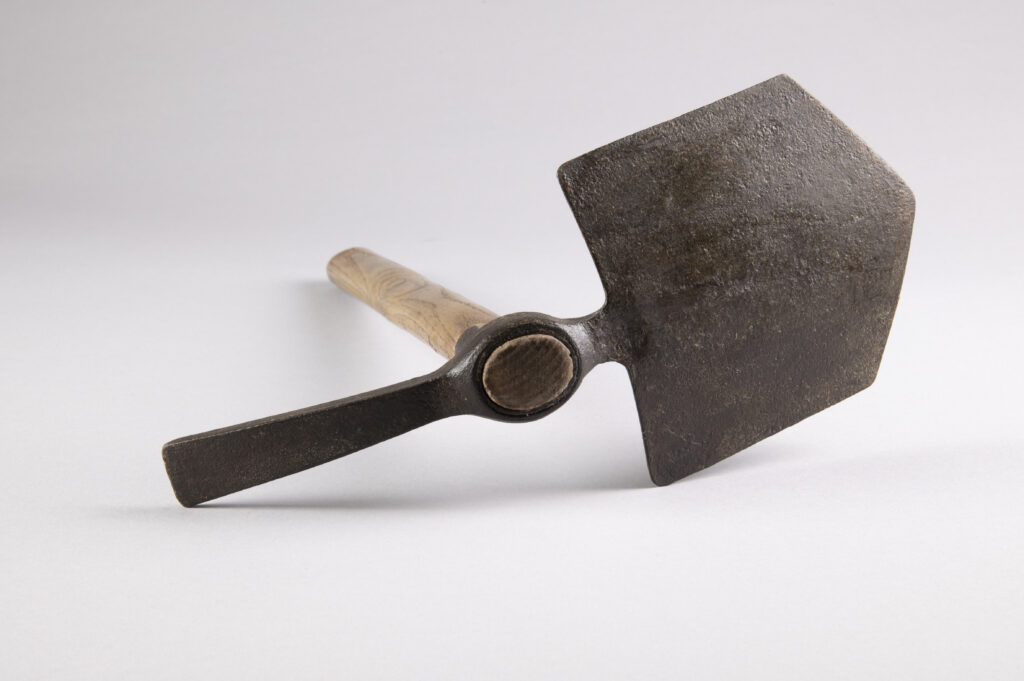
Photo 8609.21.1_c
Model of soldier – 2001.235
Dolls were popular in the Victorian era and going into the First World War, but as we enter the later periods, an increase in dolls wearing military uniforms started to emerge. A popular brand were the ‘doughboy’ dolls which were mainly soldiers and were made from cloth. Parents then started to create uniforms of soldiers and nurses for their children’s existing dolls.
But for the doll we have in our possession, it does not seem to match any of the other dolls we can find examples of, leading us to believe that it wasn’t a part of any mass-produced lines. The doll’s body seems to be made from wood with the clothes being made from khaki cloth. The model itself does not have any moveable parts making us believe that it could have been made for a diorama or a presentation although it is showing signs of wear. We do not know the date it was made or where it was made.
The model holds some sort of letter in his left hand along with a staff and a lanyard under the same arm it also has a medal on the left side of its chest. The details begin to lessen and disappear as you get further to the back of it, indicating it was not meant to be seen from behind.

Photo 2001-235_h
Medals – 202204.2.1-5
Those medals belonged to Captain Charles Luck, who was in 32 Divisional Signals Company.
The first medal is the Imperial Service Order. This was established by King Edward VII, and was awarded on retirement after 25 years of service, to civil servants. This medal is an eight-pointed silver star with a blue and red ribbon.
The next medal is the Military Cross. The Military Cross was awarded for ‘an act or acts of exemplary gallantry during active operations against the enemy or land’. The award was created on December 28th, 1914. The first 98 awards were published on January 1st, 1915, to 71 officers and 27 warrant officers. The medal is an ornamental silver cross with straight arms, suspended from a plain suspension bar.
Next, the 1914-15 Star. This was awarded for campaign service, therefore to all who served in the British and Imperial forces in any theatre of War during 1914-15. The medal is a four-pointed star of bright bronze, topped with a crown, with a red, white and blue ribbon, representing the flag of the United Kingdom.
The next medal is the British War medal. The British War medal 1914-18 was awarded to British and Imperial forces for active service in the First World War. The medal is a silver disk with a royal blue, black and white ribbon. It was instituted on July 26th, 1919.
Finally, the Victory Medal aka Inter-Allied Victory Medal was awarded by campaign service for British forces. The medal is a bronze disk with a clear lacquer coating giving a bright finish. The ribbon has a double rainbow design, violet at the edges with a red spectrum in the centre.
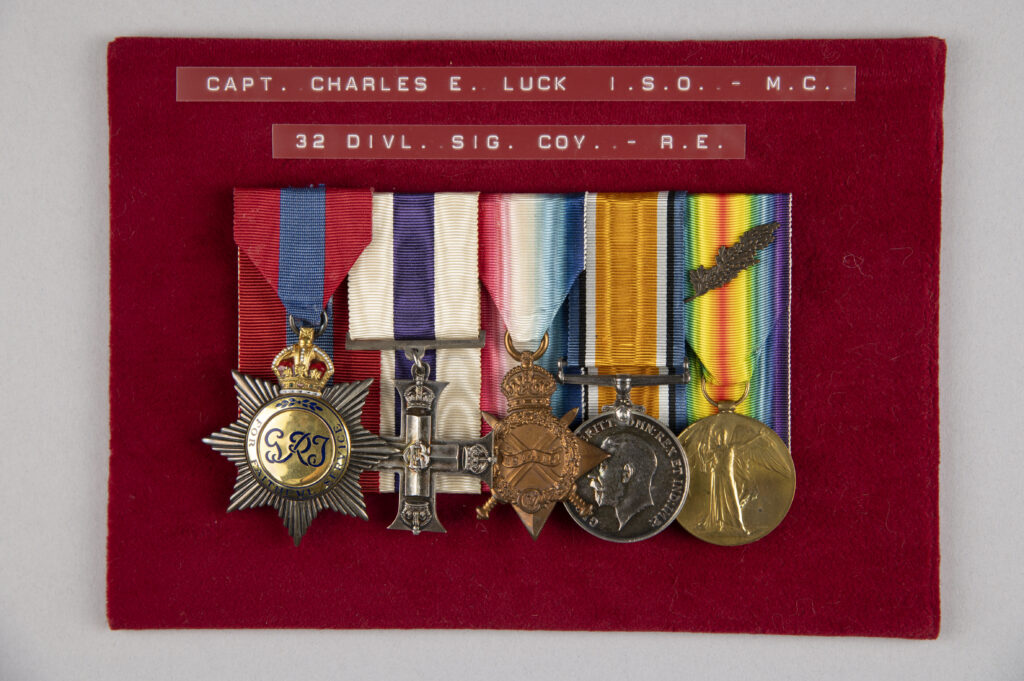
Photo: 202204-2-1_thru_5_a
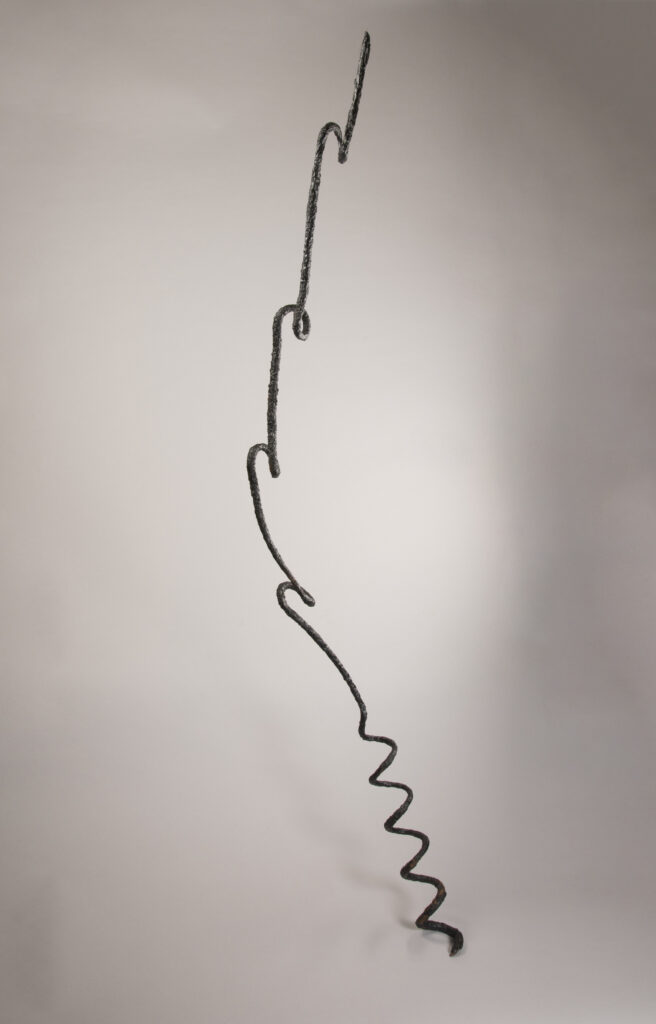
Corkscrew wire and Barbed wire – 6509.12.1; 201909-.
Barbed wire was used extensively in both World Wars in defence of the trench systems – being almost impervious to infantry troops, tools, bombing or a tank being an effective way to destroy it. Barbed wire was set up in multiple different ways. The main ones were held up with a corkscrew wire which was easily wound into the ground, or if the time was available they would have used wooden posts. Another formation that was used was the knife rest. This would sit over a trench before being pulled down to block access to the line to invading troops.
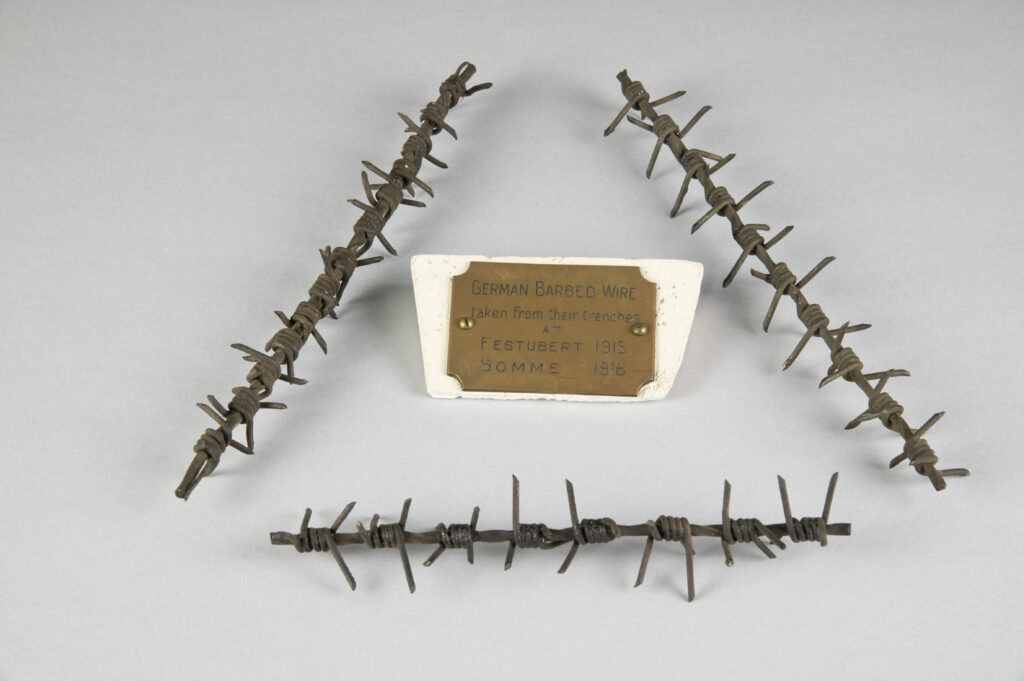
Photo: 6509-12-1_&_6509-12_c
201909-6_c_edit
28 January 2026