
Members of Medway-based art group Explore & Draw came together at the Royal Engineers Museum with the purpose of creating this exhibition inspired by what they discovered from that day. Each artist has each responded in their own unique way, some drawing directly from personal connection to the Royal Engineers, or the inspiring stories of others contained within these walls.
In the Service of Peace
Tracey Kisbee
Inspired by our visit to the Royal Engineers Museum I wanted to find out more about my father’s service in the army as, like many servicemen and women, he was very reluctant to talk about his experiences.
Armed with the details of his regiments I was determined to try and find out what I could from the Museum, however there were only a few references found amongst the exhibits but it was enough to start a series of conversations with my father.
From a military family, my father spent his youth travelling the world with my grandmother as they moved through a series of marital quarters following my grandfather’s service. My aunt had been left at home in the UK to be schooled so they grew up quite separately, and upon the birth of my uncle, my father was returned to the UK to boarding school whilst my grandfather’s service continued – all three siblings were brought up as individuals rather than share a close family bond.
My father’s story within the army started just four days after his fifteenth birthday, with my grandfather announcing that he was now old enough to find his own way in the world (as his family had done to him) – and with limited choices available my father joined the Army Apprentices School in Chepstow in 1961.
There he found himself educated and taught skills to enable his career in the Royal Engineers to proceed, with qualifications gained as a plant (engine) fitter and combat engineer with his active service starting in 1965 with the 36 Engineer Regiment. My father says that one of the more valuable things he gained at the school was the friendships made and a sense of belonging he’d not really had before… this sense of camaraderie continued throughout his service and the friendships continue to this day.
My father’s service with the Royal Engineers is typical of the works that the Corps undertake even to this day. Filled with tours of service providing assistance to communities both abroad and at home, carrying out repairs and construction of infrastructure projects and being a part peace keeping duties across the globe.
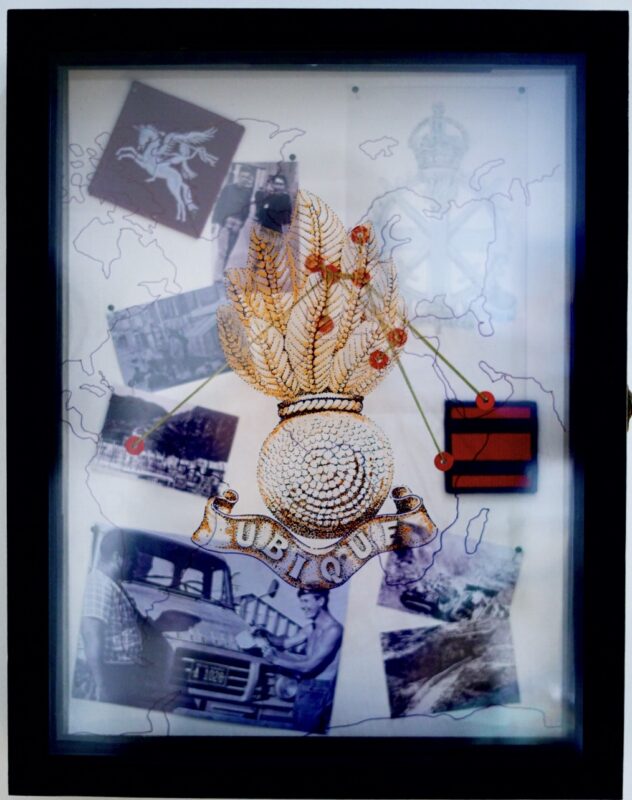
Being part of BAOR (British Army of the Rhine) from 1965-1967 my father helped to defend West Germany during the Cold War and guarded Rudolph Hess during his imprisonment following WWII. During this period he completed his parachute training and earned his Pegasus badge or wings. It was during this time that he undertook tours of Norway (building an outward bound centre and winter warfare training centre), Kenya (building schools and digging wells for local communities), Bavaria (building bridges and drainage culverts) and Aden (helping to construct the Dhala Road).
In 1967, my father’s regiment returned to the barracks in Maidstone, helping to provide flood relief to the community; before heading to British Honduras in 1968. Here the Royal Engineers built roads, bridges and drainage culverts, opened and ran a stone quarry with the local community. My father also helped to repair and improve local airfields before returning to the UK on exercise.
In 1969 my father was posted to Gibraltar where he helped to run and maintain the joint services power station. A brief return to the UK saw trips to Europe and the Middle East for training exercises before heading to Cyprus in 1970 to assist with peace keeping duties for the United Nations. Undertaking repairs to RAF Akrotiri during his time there, my father also helped to build a harbour mole for the local community. Before being posted to Libya following the coup mounted by Colonel Ghaddafi to assist in the dismantling of the UK airbase there.
Returning to Cyprus before heading back to the UK in 1971, my father was then posted to Northern Ireland to undertake peace keeping duties. Before return tours to the UK, Gibraltar and Northern Ireland in 1972-1973 where the Royal Engineers were helping to construct the maze prison, my father’s squadron badges can be seen on the gates within the Museum (9 Independent Para Squadron and 20 Field Squadron).
Returning to the UK in 1973 my father made his decision to leave the army, as a newly married man it was a different life he chose for his wife and future children – but the skills learnt stood my father in good stead in the civilian world and the friendships made over the 12 years within the army have lasted a lifetime.
Inspired by the works of the Royal Engineers and their links to local communities my artwork sought to draw from my father’s story, with the emblem and motto “Ubique” (translated as “everywhere”) key to the piece. However, it was the wording from the rear of my fathers UN medal presented after his peace keeping works in Cyprus that really brought the piece together… “In The Service of Peace”.
Explore & Draw at the Royal Engineers Museum runs from the 4th April to 25th June
31 March 2023