

The Wartime art of Birkin Haward, 82 Assault Squadron, Royal Engineers.
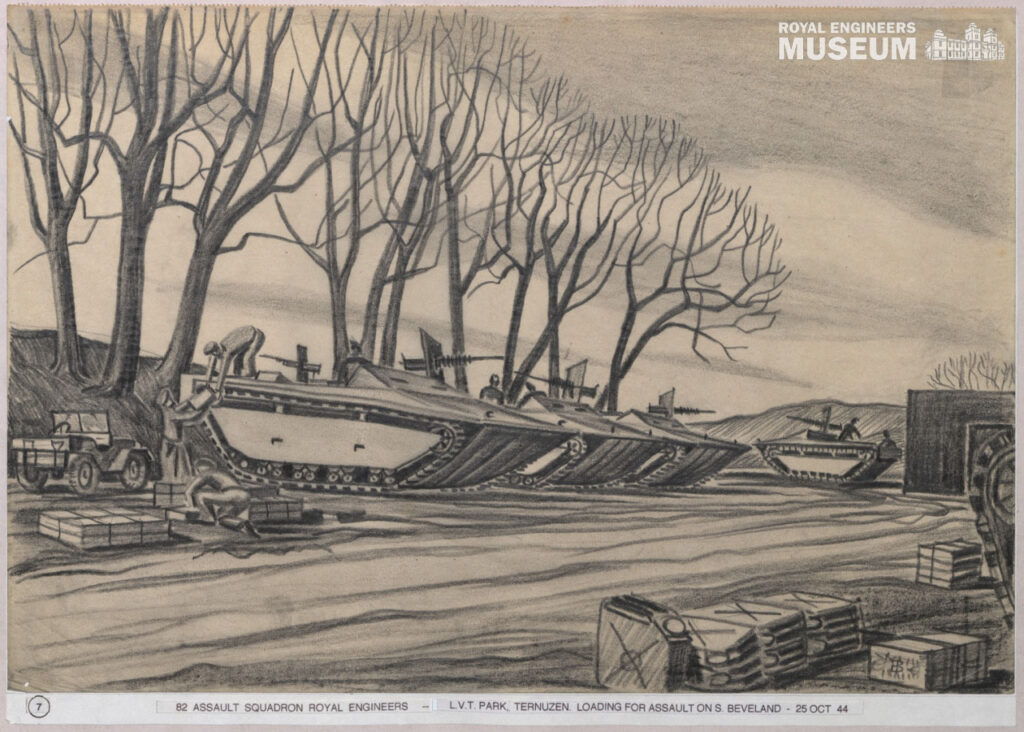
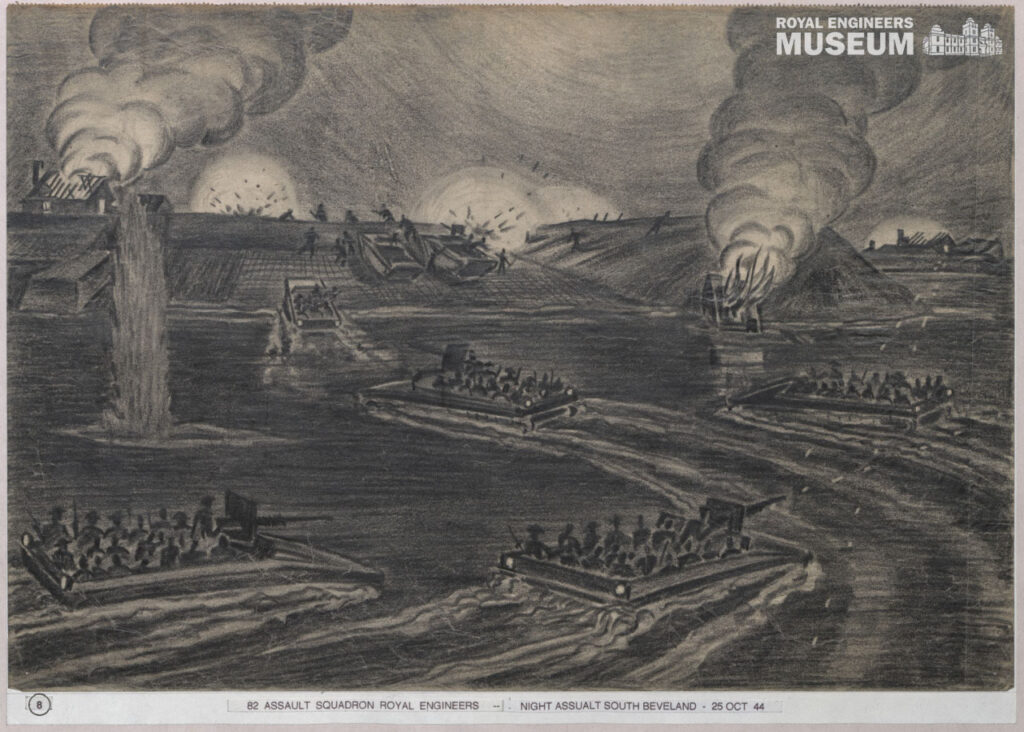
Several of the amphibious LVTs (landing vehicle tracked) are being prepared during the Battle of the Scheldt.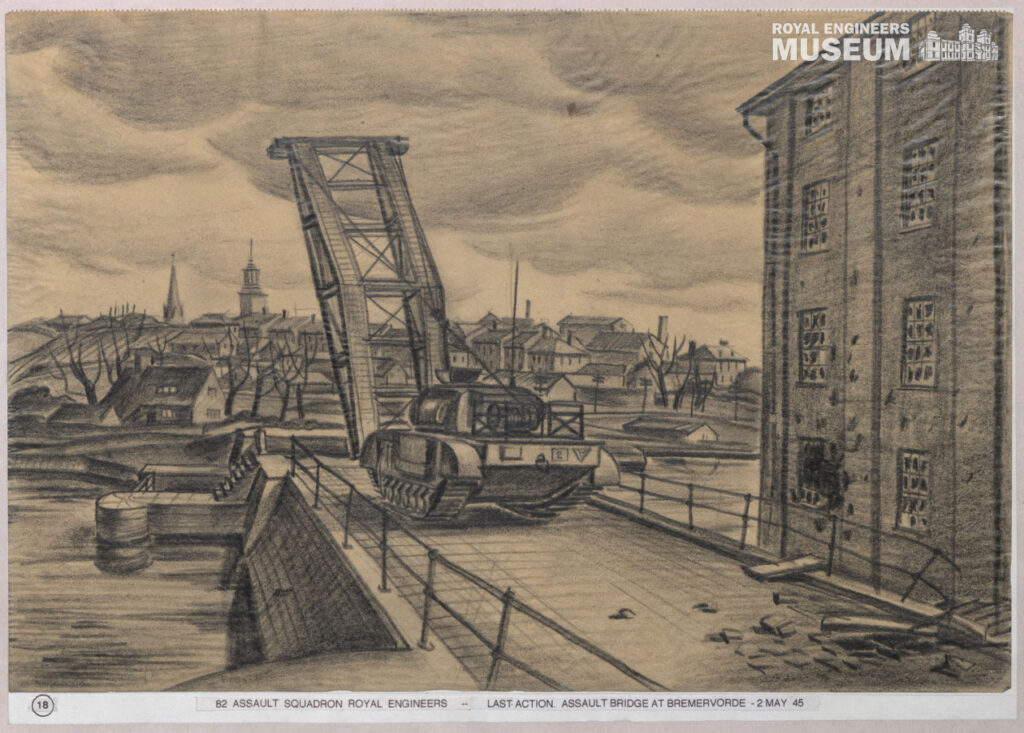
Here we can see an SBG (Small Box Girder Bridge) attached to the front of an AVRE.
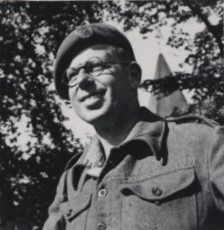
The drawings you can see here are examples of the wartime art of Lieutenant Birkin Haward.
The images represent his Squadron’s experiences in Northern Europe from D-Day through to the end of the War. Haward later compiled his drawings in a commemorative album which was donated to the Museum in 2001 by Mr Haward’s son.
Haward was born in 1912. He trained as an architect, qualifying in 1934. He worked for German émigré architect Erich Mendelsohn and was devoted to promoting the modern movement in Britain in the early-mid Twentieth century.
When the War began, Haward designed workers hostels, before volunteering for the Royal Engineers in April 1943. Upon his arrival in Normandy he acquired a thin sketch book and pencils from an abandoned post office, using this to create his sketches. In quiet moments he drew what he and his squadron members had seen. These were then later developed into the beautiful and detailed works you see below.
Wartime Art: D-Day to the Scheldt
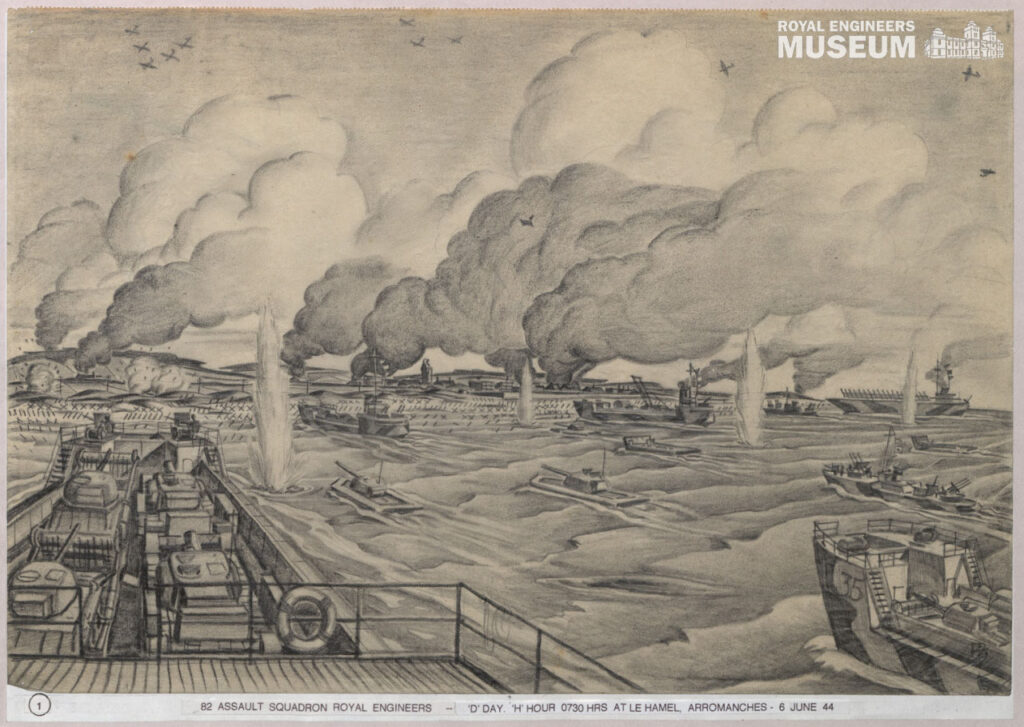
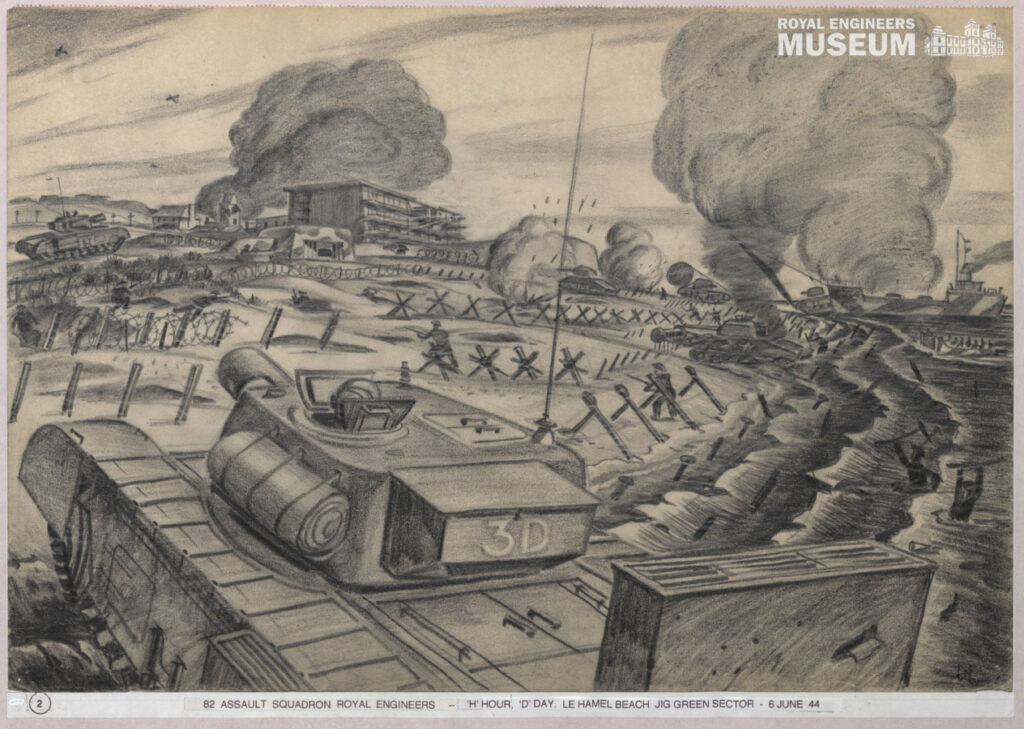
Below are Haward’s sketches which depict scenes from the beach landings on D-Day to the taking of the Scheldt. Haward landed on Gold beach where his squadron helped clear the area of obstacles and defences. The taking of the Scheldt came after the Normandy campaign. The object of this operation was to secure the Scheldt River estuary and therefore the port of Antwerp. This then allowed the Allies to bring in more supplies.
Wartime Art: The advance into Germany
The drawings that follow represent what Haward experienced when 82 Squadron advanced into Germany. The squadron saw active service in north western Germany, but had travelled to eastern Germany by the time of the ceasefire in May 1945.
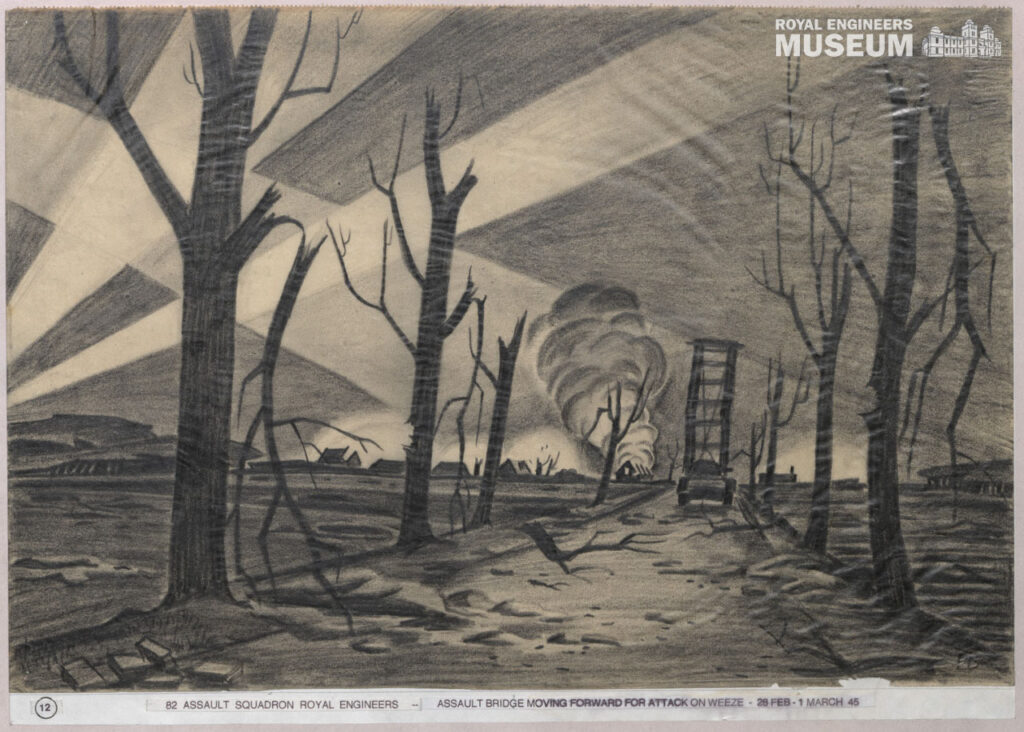
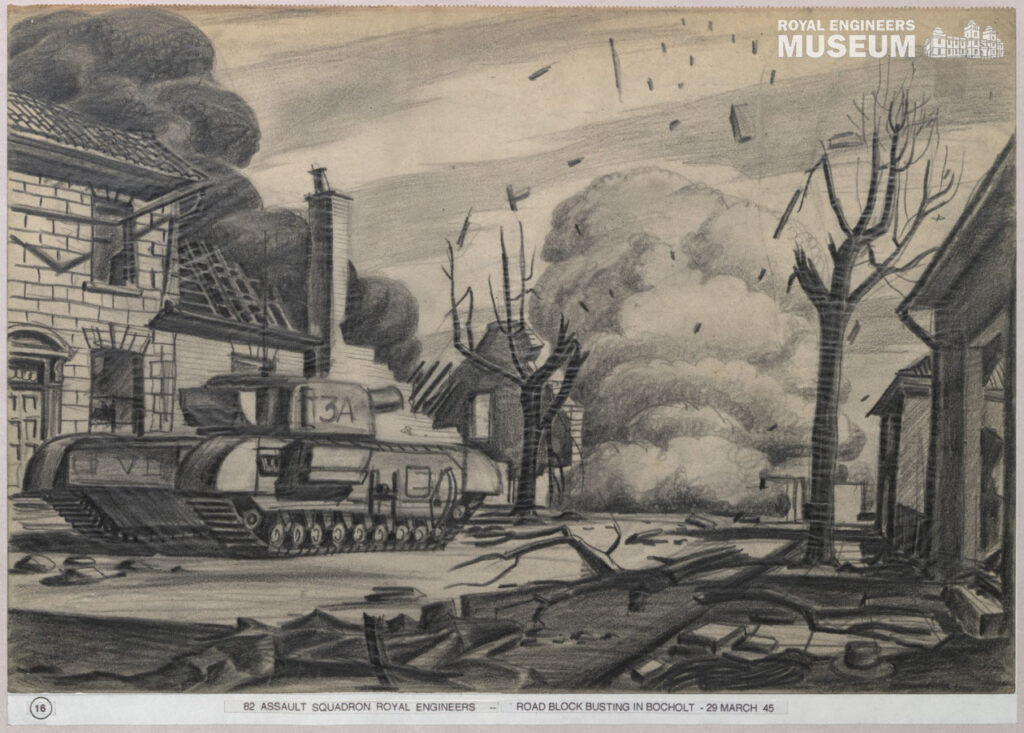
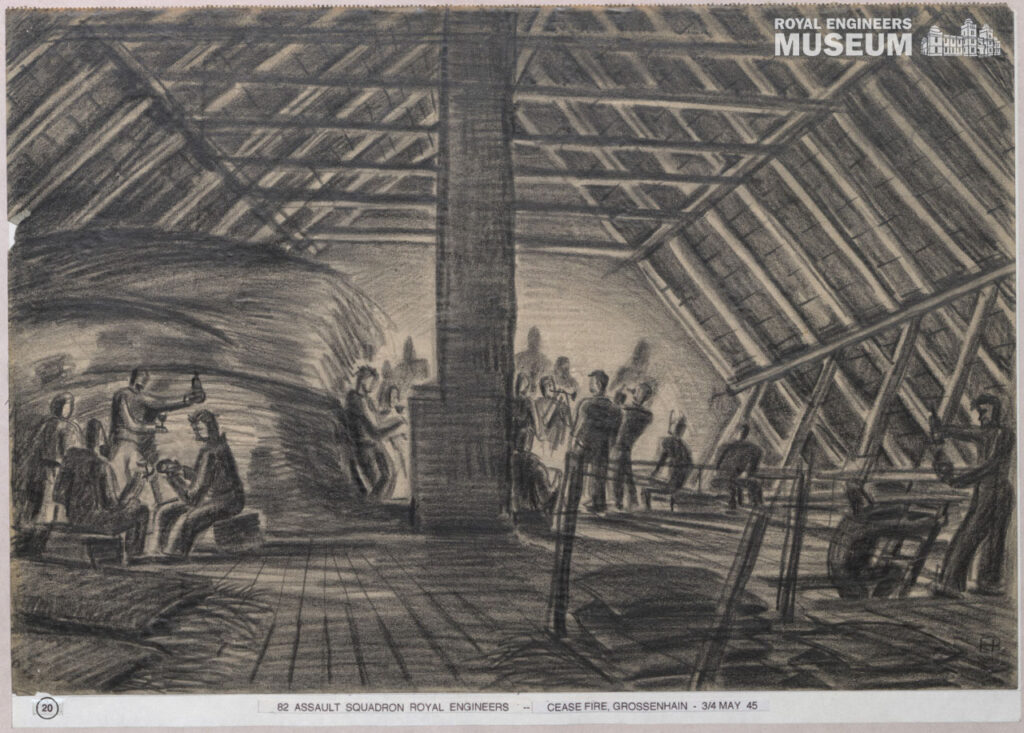
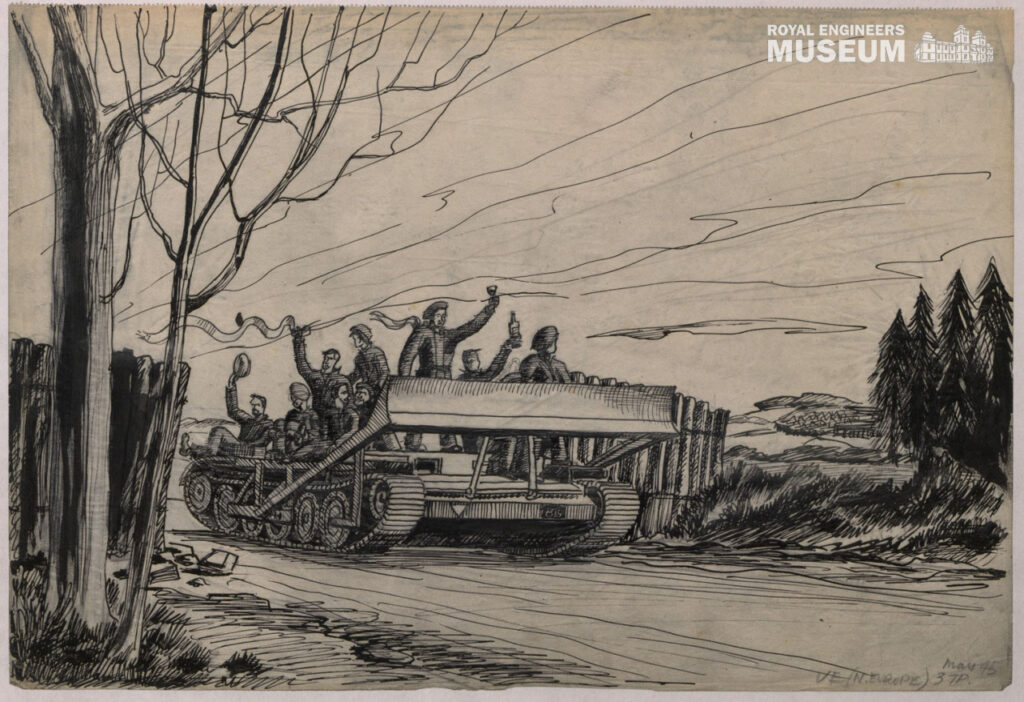
The fighting is at and end and VE day is soon to follow on the 8th of May, when the Allies officially accept the Nazi surrender.
Other Wartime artworks
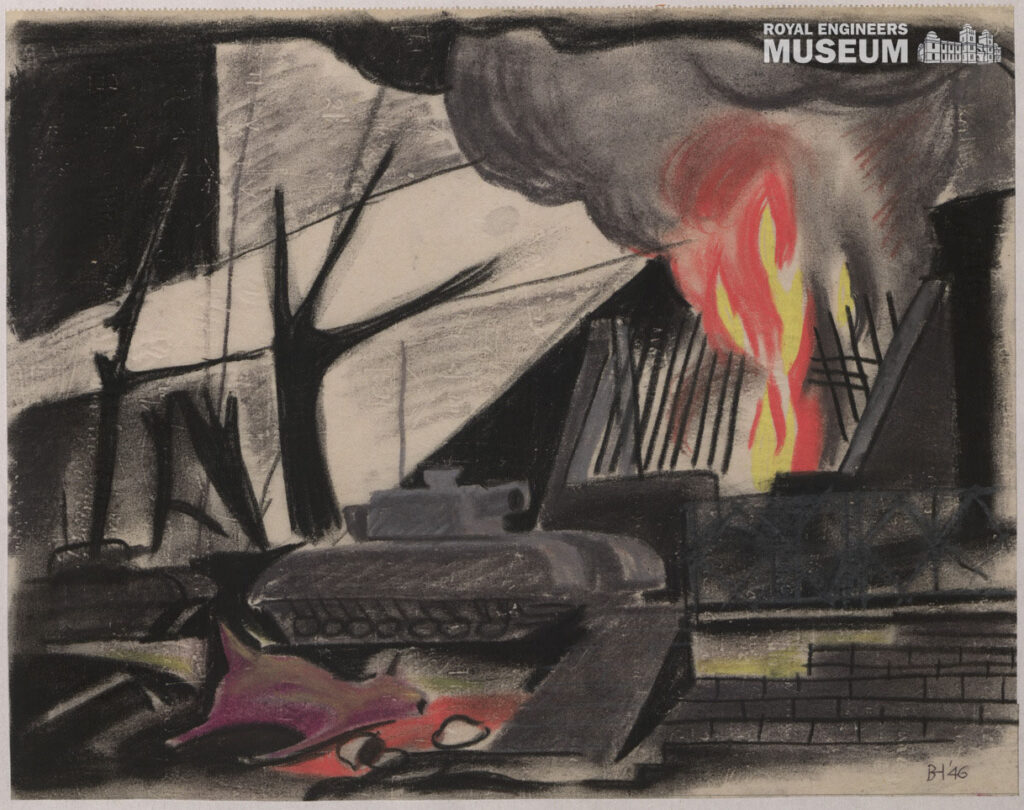
The majority of the drawings in Haward’s sketch book are all intricately detailed pencil drawings. However, as you delve further through the pages it is possible to see different techniques, medium and artistic influences. Pastels add flashes of colour, unfinished watercolours show a softer style and the effect of early Twentieth Century art movements can be seen.
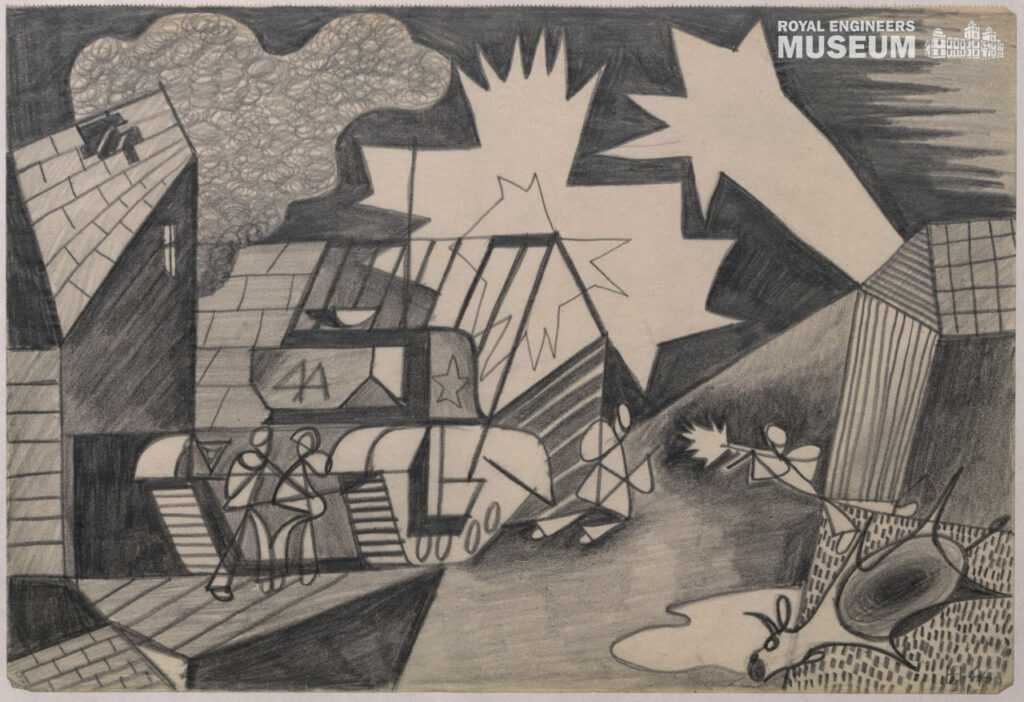
In this section, you can see the influence of Pablo Picasso and Georges Braque in the cubist-inspired drawing of 82 Assault Squadron moving along behind a tank, with enemy fire to the right and searchlights in the sky, as well as a deceased cow in the bottom right hand corner. The tanks and buildings are depicted from a multitude of viewpoints, whilst other areas are flat emphasizing the surface of the paper and its materiality.
You can explore our Second World War collection further via our Online Catalogue.
9 August 2021