
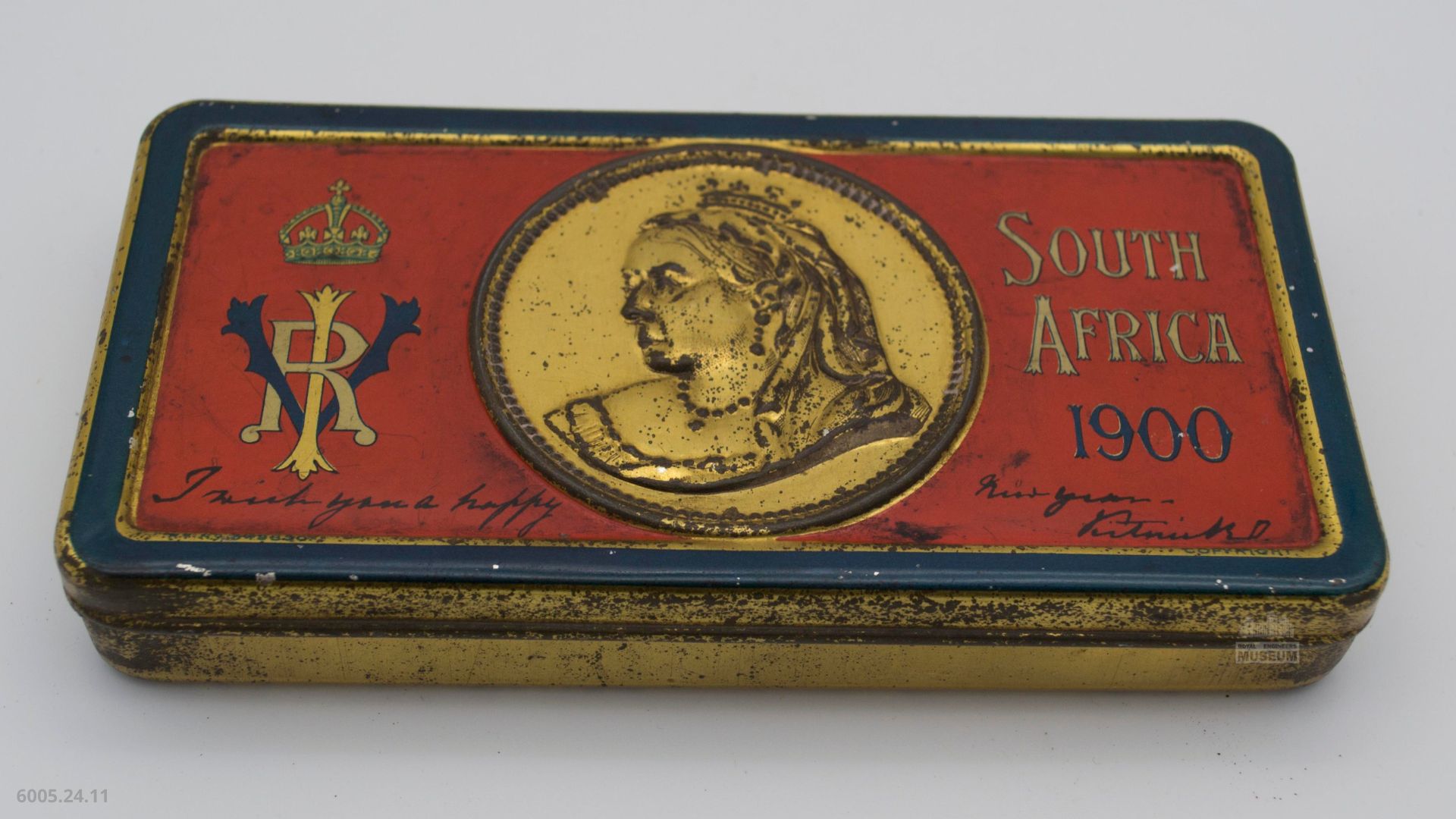
As many will know (and possibly have at home) during the Great War, Queen Mary saw to it that brass Christmas tins were distributed amongst the soldiers fighting at the front. These brass tins had an assortment of contents, from chocolate to various tobaccos, and spices.
However, there was a tin given out a bit earlier during the Boer War, and some of these tins can tell fantastic stories.
In 1899 Queen Victoria decided tin boxes of chocolate should be gifted to her troops serving in South Africa. The intention was that every soldier and officer should receive a box with the inscription ‘South Africa 1900’ and in the Queen’s handwriting, ‘I wish you a happy New Year’, with each box containing a half-pound (227g) of vanilla chocolate.
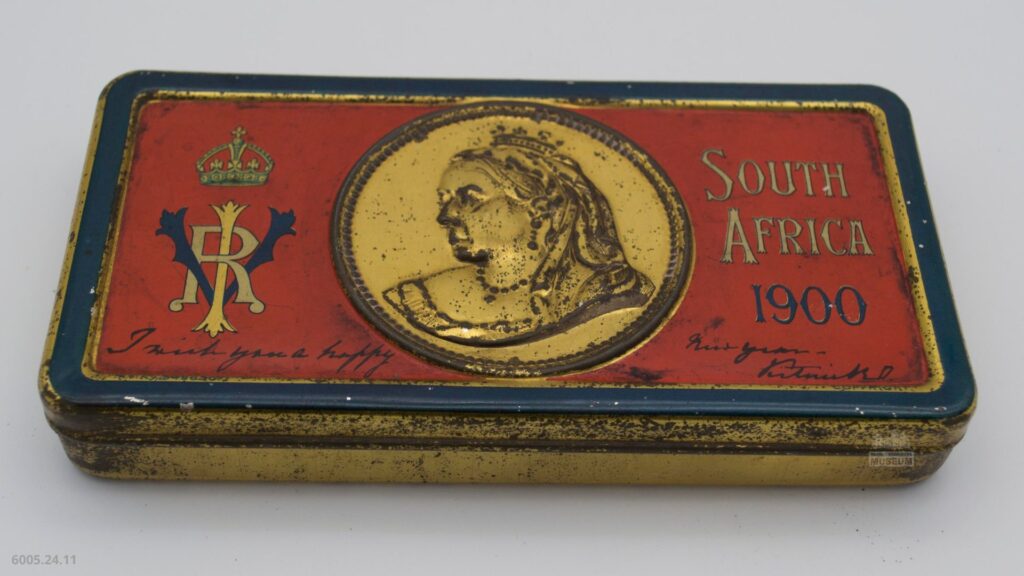
In order to carry out this project, three of the country’s principal chocolate manufacturers, J.S.Fry & Sons, Cadbury Brothers Limited and Rowntree and Company Limited were consulted. The order was placed, and by the end of 1900 it totalled 123,000 tins. Although all three manufacturers refused to accept payment for the order, because as Quakers they had no wish to profit from the War, instead, they donated the chocolate to the effort. The Queen personally funded the production of the tins, based on a design by Barclay and Fry Limited of Southwark.[i]
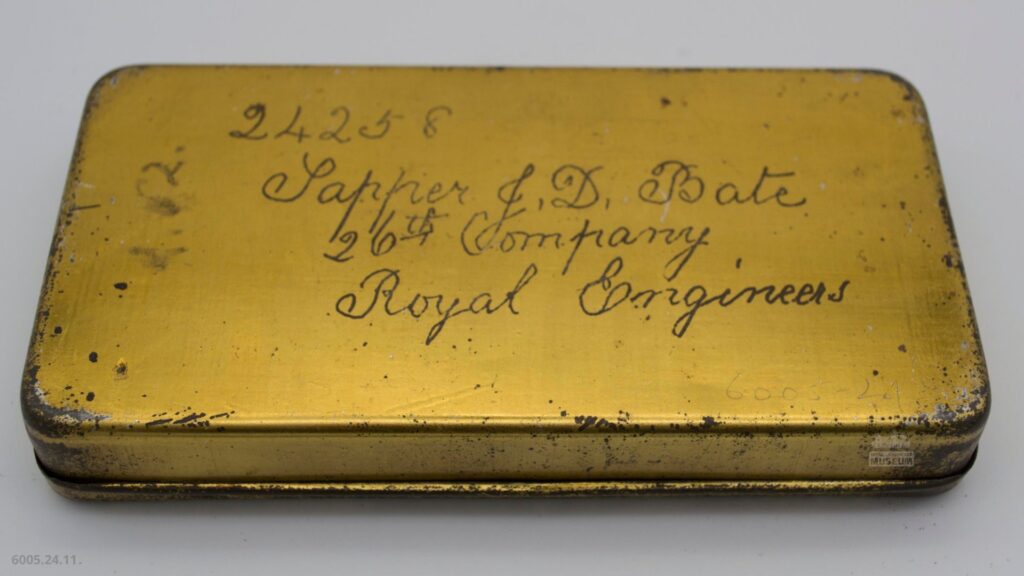
In the museum’s collection, we have a South Africa tin, inscribed by the soldier, along with his campaign medals. 24258 Sapper James (Jimmy) Denning Bate, 26th Company Royal Engineers has scratched his details into the back of the tin, and his story is a fantastical one.
Jimmy was born in 1871, and enlisted in the Royal Engineers in 1889 aged 18. The youngest of 3 sons of a Birmingham Blacksmith, he signed up under a 12 year engagement term (7 with colours and 5 reserve). He had trained with his father as a blacksmith in his younger years and was undoubtedly a good addition to the Corps of Royal Engineers.
In Sudan, he saw service on the Dongola Expedition, helping to transport a gunboat overland in sections to the North, where he as a blacksmith was involved in reattaching the parts. Once the boat had been re-joined, he was called upon to man the Maxim Nordenfeldt gun.
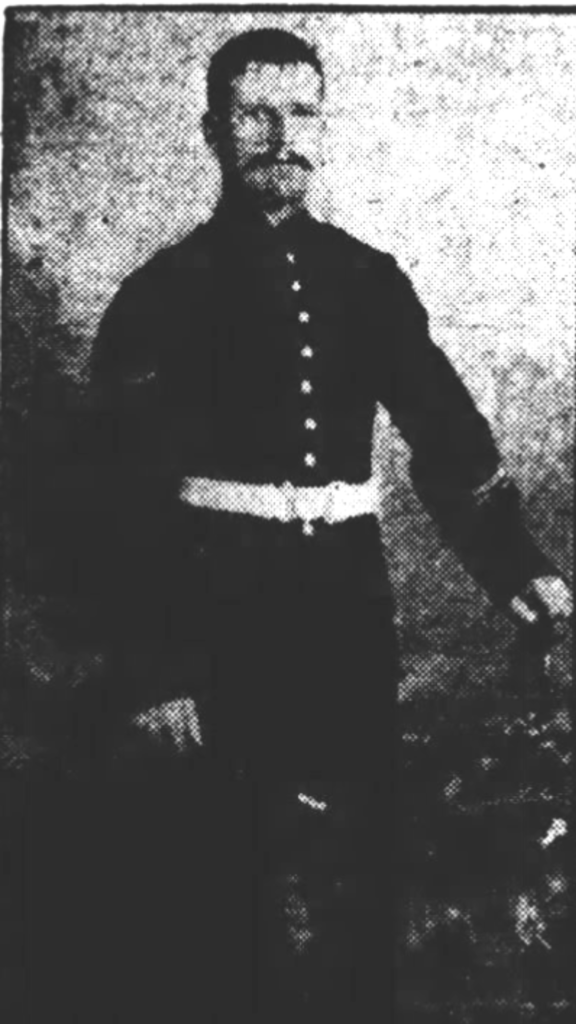
He was discharged from the Colours into the reserve in 1899, whereby he came home, married and took on a Public House in Stratford-on-Avon. In his words “we were just properly getting settled at Stratford and the pub going nicely when Boer-War broke out”. Being on the reserve I was sent for straight away”. In South Africa, where he was to get his tin he served with a unit bridging ravines and deep rivers, often under heavy fire – he was however magnanimous about his foe saying ”they were good soldiers – the Boers”.
When he returned home again in 1902/3 he had given up the public house he had run and instead got a job in Birmingham with Norton Motor Cycles as a blacksmith – that was until 1914. He was recalled once again to the colours and into one of the new Signal Companies, where he served as a Farrier Corporal. According to a 1956 news article “he saw the bloodbath of the Somme – Passchendale, Neuf-Chatel and Vimy ridge“. He was invalided home for rest in 1916, he returned from that leave to board a troop ship for Salonika.
He was discharged no longer fit for military service on the 14th of March 1919 with Malaria, most probably caught in Salonika. He returned to life as a Blacksmith for the next 20 years. In 1924 he joined the St John Ambulance Brigade and in 1930 he joined up as a Special Constable with the Birmingham City Police Force. In 1938 he was working as a policeman in the Ambulance Section of the Birmingham Special Police force.
On the outbreak of war (6pm, September 3rd to his memory), he received his call-up papers once again, but he dutifully reported for service, this time he was transferred to the Royal Army Medical Corps, his talents they said being more useful there. He arrived at Woolwich barracks shortly afterwards. “It was like the old days, getting ready for the Sudan” he told a reporter years later. Upon reaching Woolwich, he received a medical examination passing A1. It was here they asked his age and when told 69, the medical officer just shrugged and said, “They’re upping the age it seems nowadays…”. Jimmy was in his barrack room prepping his kit to embark for France with the Expeditionary force when he was in his words “Rumbled”, he watched as his comrades marched through the gates and off to war, his discharge papers being filed almost simultaneously. He returned home in January to his job with Norton Motorcycles.
Aged 85 he still worked, too old for blacksmithing, he took a position as a Works Security Officer with his old company, retiring aged 88, one year before he passed away at home. His funeral was attended by over 600 workmates and dozens more old comrades.[ii]
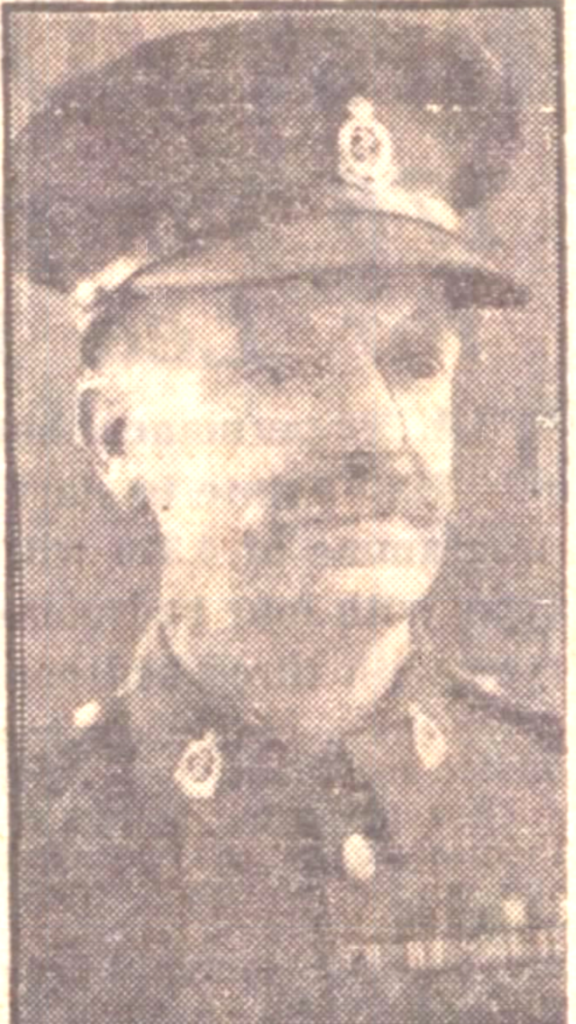
Published in the Evening Dispatch, 25 May 1945
[i] https://collection.nam.ac.uk/detail.php?acc=1959-05-68-1
https://www.godalmingmuseum.org.uk/?page=boer-war-christmas-tin
[ii] Evening Dispatch, 25 May 1945, Page 3
Sunday Mercury, 04 Nov 1956, Page 12
Sunday Mercury, 21 Feb 1968, Page 5
15 December 2022